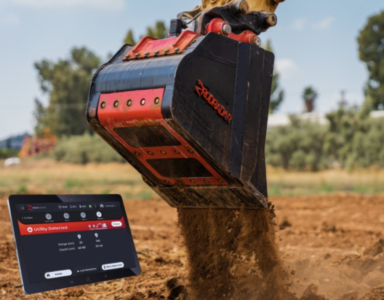
In a multi-year and fleet-wide deployment, Network Plus becomes the first to deploy RodRadar’s world-first 30cm Live Dig Radar® (LDR) system, in partnership with UK distributor Machinetech, to pioneer a new standard for excavation safety.
Serving major UK asset owners including Severn Trent Water, Cadent Gas, National Grid and UK Power Networks, Network Plus will roll out the technology across its repair and maintenance fleet of more than 200 machines. The rollout marks a shift toward eliminating underground utility strikes, which is an industry-wide safety challenge.
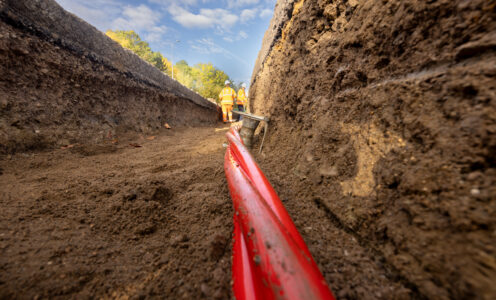
According to University of Birmingham research, the UK suffers over 60,000 utility strikes every year, which costs the economy an estimated £2.4 billion annually in project delays, traffic gridlock and severe safety risks to site crews.
Machinetech identified Network Plus’s strike-risk challenge and introduced the contractor to LDR. Recognising that the highest density of shallow and high-risk utilities is found in urban environments, Network Plus challenged RodRadar to scale down its proven technology.
In response, RodRadar engineered the Type 0 LDR Excavate, which is the world’s first-ever 30cm (12″) wide digging bucket embedded with live ground-penetrating radar. Following successful field trials, the system proved it delivers real-time alerts directly to the operator the moment a utility is detected. By providing the operator with immediate visual and audio alerts exactly when they are needed the most, it acts as a digital safety net that prevents utilities from turning into catastrophic strikes.
Dave Fleming, Head of Plant at Network Plus, commented: “Utility strikes are a costly, high-risk disruption and preventing them is a priority across our operations. RodRadar’s LDR technology is a complete game changer for risk management. By rolling this out across our fleet, we will not just protect our crews and assets, we will guarantee a best-in-class and uninterrupted service for our clients and the millions of UK citizens who rely on their infrastructure.”