Overview
Network Plus delivers essential power infrastructure services across the UK for clients including National Grid, UK Power Networks, SP Energy Networks and Scottish & Southern Electricity Networks. To meet growing national demand the business has developed a long-standing programme to recruit highly skilled Filipino Overhead Linesmen who bring stability to this critical workforce.
Today, 20 Filipino Linesmen work within the National Grid contract, with a further 14 supporting SSEN and SP Energy Networks. This programme has operated successfully for more than a decade and now forms a key part of Network Plus’ ESG contribution—enhancing workforce diversity, supporting fair employment, and enabling the safe delivery of infrastructure that underpins the UK’s transition to a more resilient and sustainable energy system.
Background
The UK’s energy networks are undergoing major modernisation to support the shift to cleaner power, improved resilience and increased renewable generation. Overhead Linesmen are at the centre of this transformation, maintaining and upgrading the overhead line infrastructure that keeps electricity flowing safely to homes, businesses and critical services. The role requires a rare mix of technical skill, engineering knowledge, climbing competence and rigorous health and safety discipline.
However, the UK has faced a long-term shortage of qualified Overhead Linesmen. As demand for new connections, refurbishments and fault response has increased, the sector has struggled to attract sufficient domestic candidates with the required experience.
The Problem
The skills of an Overhead Linesmen include climbing at height, engineering, working in adverse weather conditions and being on hand for unexpected faults. Additionally, health and safety are at the core of what they do and maintaining strong standards when working at height and in difficult conditions, is a hard skill to find.
While it offers excellent career prospects, the complexity and intensity of the work make it difficult to attract and retain enough British workers to meet industry-wide needs.

The Solution
Filipino Linesmen arrive with strong technical grounding, extensive hands-on experience and a high level of safety awareness, enabling them to integrate quickly into UK teams and maintain the rigorous standards required for overhead line work. Many have worked within Network Plus contracts for more than 10–15 years, gaining UK citizenship, settling in local communities and becoming an essential part of the workforce.
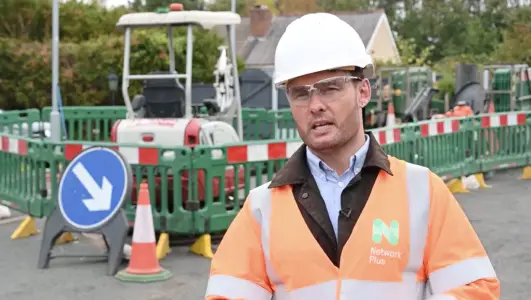
Alan Hogg, Operations Manager, has been in the South West working with National Grid since 2003. Some of the Filipino Linesmen on this contract have worked with Alan for over 15 years. They have citizenship, live in Cornwall, Devon and surrounding areas. Some have brought family over, some work all year and travel back to the Phillipines for a month in December to see family.
Some have transferred onto our other power contracts like SSEN and SP Energy Networks. This recruitment has become such common practice that in Launceston, a village in Cornwall, 25% of the town is Filipino, all mostly working in Overhead Lines.

Alan:
“There was and still is a huge shortage of linesmen in this country. We used to have a lot of Eastern Europeans who helped deliver the work, but since Brexit, that has ceased. We acquired a business called Overlec in 2018/19 which was an Overhead Lines business, they have Filipino staff. We then used a company in the Philippines to find more qualified linesmen.
When I started as a Trainee Linesmen in 1996 it was very unreliable – hired today, fired tomorrow. The money was fantastic, but now it’s evolved into a real career.”

Support
Filipino Linesmen undergo extensive training in the Philippines before relocating, allowing them to arrive fully qualified and ready to begin work on UK networks. To support a smooth transition, Network Plus pairs new recruits with experienced Filipino colleagues who can assist with communication, technical terminology and cultural acclimatisation.

The first three months include structured support with housing, transport and settlement to ensure workers adjust comfortably to life in the UK and to maintain strong welfare and governance standards.

“When we started working with Manila, we knew we had 4/5 years left on the contract. That meant 4/5 years of promised work, which in this field is very good. We help them for the first 3 months with housing and settling in as it is a bit of a culture shock! You can’t fault these guys.
Eager to please, easy to work with, always smiling, irrelevant of the weather. We took them out over Christmas and they absolute loved a bit of karaoke!”